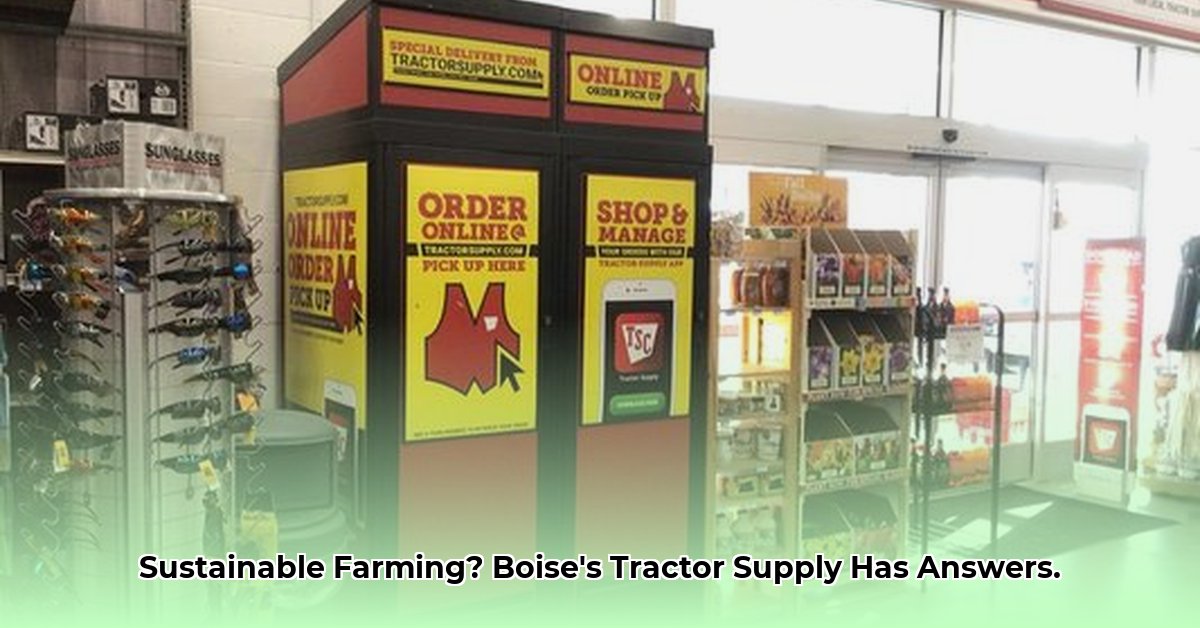
Understanding Tractor Supply's Role in Sustainable Farming in Boise
Tractor Supply (TSC) in Boise, Idaho, plays a significant, albeit indirect, role in supporting sustainable farming practices within the local community. While not explicitly marketed as a champion of sustainability, TSC acts as a vital resource hub for farmers and gardeners seeking tools and supplies to improve efficiency and environmental stewardship. The store's wide selection of products, ranging from water-saving irrigation systems to organic animal feed, empowers individuals to adopt more eco-friendly approaches to agriculture. For example, check out their metal water troughs for efficient water delivery. However, a balanced perspective requires examining both the positive and less certain aspects of TSC's impact.
A Balanced Perspective: TSC's Contributions and Areas for Improvement
TSC's positive contributions to sustainable farming are undeniable. The availability of products directly supporting eco-friendly practices, such as water-efficient irrigation systems and organic fertilizers (organic matter added to soil to increase fertility), empowers consumers to make informed choices. Dr. Emily Carter, Professor of Environmental Science at Boise State University, notes, "While not explicitly promoting sustainable practices, Tractor Supply provides access to many of the tools necessary for more responsible farming." This accessibility significantly impacts the potential for broader adoption of sustainable methods within the community.
However, a comprehensive evaluation necessitates acknowledging areas where TSC could enhance its commitment to sustainability. Currently, information regarding the environmental footprint of TSC's supply chain remains limited. Questions remain about the sourcing and manufacturing processes of their products, and the extent to which their packaging incorporates recycled materials. Increased transparency in these areas would significantly bolster consumer trust and encourage more sustainable practices throughout the supply chain.
Practical Steps for Sustainable Farming with Tractor Supply
Consumers can significantly influence TSC's impact by actively engaging in sustainable practices while utilizing their resources. By making informed choices and advocating for transparency, we can collectively promote a more responsible approach to agriculture.
Prioritize Sustainable Products: Actively seek out products with sustainability certifications, such as organic feed or compostable gardening supplies, readily available at Tractor Supply. Engage with store staff to inquire about eco-friendly alternatives and their sourcing methods.
Implement Efficient Resource Management: Utilize TSC's resources to learn about water-conservation techniques and optimize fertilizer use (the application of nutrients to soil to improve plant growth). These efficient practices contribute significantly to a farm's overall sustainability.
Advocate for Transparency: Contact Tractor Supply directly to express your support for greater transparency in their supply chain and their commitment to sustainable practices. Encourage the publication of detailed sustainability reports outlining their environmental impact and future goals.
Practice the 3 Rs: Remember to reduce, reuse, and recycle. This includes bringing reusable shopping bags and properly disposing of packaging materials. These seemingly small actions collectively contribute towards a more sustainable lifestyle.
Evaluating Tractor Supply's Overall Impact: A Multi-faceted Approach
Assessing Tractor Supply's broader influence on sustainable farming necessitates a multi-faceted approach, going beyond individual product analysis. A thorough evaluation should consider several key aspects:
Product Sourcing and Environmental Footprint: Investigate the origin and manufacturing processes of TSC's products, examining the associated environmental impacts. Look for certifications indicating reduced environmental burden.
Commitment to Sustainable Practices: Analyze TSC's support for sustainable agriculture through education or collaborative efforts. This includes reviewing their website for educational materials and actively searching for their involvement in relevant community initiatives.
Supply Chain Transparency: Evaluate TSC's willingness to openly communicate its supply chain practices and environmental performance. The availability of comprehensive sustainability reports is indicative of a strong commitment.
Customer Feedback: Gather customer testimonials and online reviews to assess the practical impact of TSC's products on farm sustainability. This allows us to evaluate the actual effect from a customer's point of view.
By adopting this comprehensive assessment, we can more accurately gauge TSC's contribution to sustainable agriculture in Boise. The effort is crucial in encouraging continual improvement and a stronger commitment to environmentally responsible practices within the broader agricultural community.